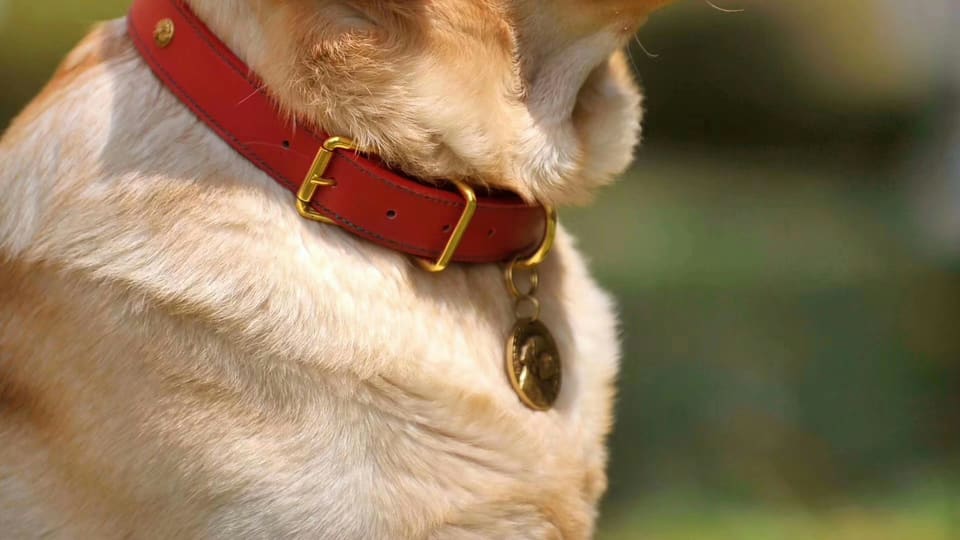
What Should You Put on a Dog Tag in the UK?
The short answer
By law, your dog's tag needs your name and address (the owner's, not the dog's) whenever your dog is in a public place. Most owners use their surname, house number and postcode, then add a mobile number so whoever finds the dog can ring straight away. The dog's name is optional.
In this guide
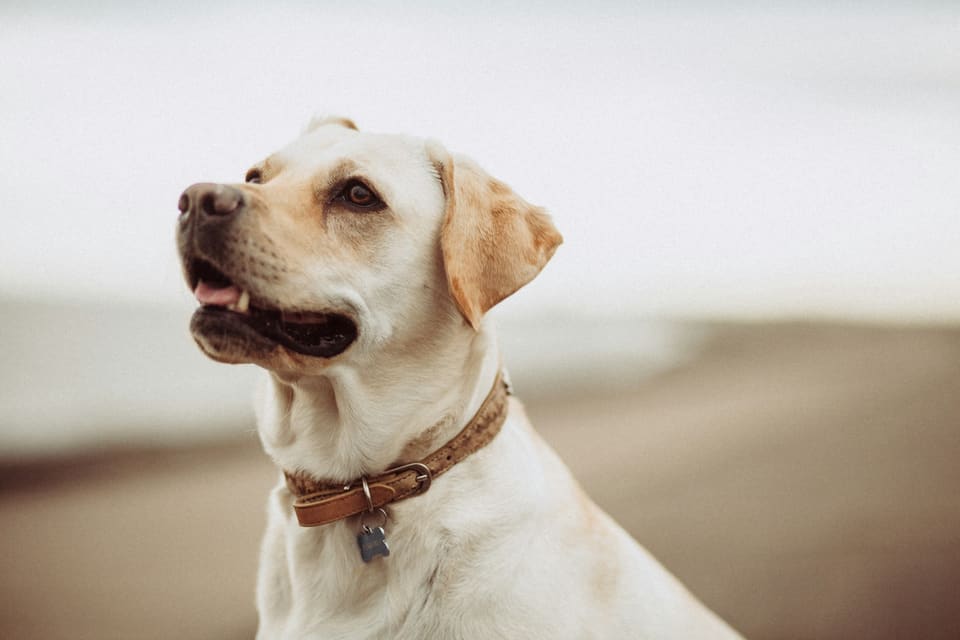
If your dog slipped its lead in the park tomorrow, the tag is the first thing a stranger would look at. It's also a legal requirement in the UK, and a lot of tags for sale don't quite meet it. Here's what the law actually says, what to put on each side, and how much text fits.
The law in one line
The rule comes from the Control of Dogs Order 1992. Article 2(1) says every dog "while in a highway or in a place of public resort shall wear a collar with the name and address of the owner inscribed on the collar or on a plate or badge attached to it."
In plain English: when your dog is on a road, pavement, park or anywhere else the public goes, it must wear a collar showing your name and address, either on the collar itself or on a tag attached to it.
A few working dogs are exempt while working, such as packs of hounds, police dogs on duty and dogs registered with Guide Dogs. For everyone else the rule applies every time you leave the house.
If you don't follow it, the owner or the person in charge of the dog commits an offence under the Animal Health Act 1981, which can mean a fine. The Order sets the maximum at level 5 on the standard scale.
GOV.UK puts it simply: "If you have a dog, it must still wear a collar and tag with your name and address when in a public place." Northern Ireland has its own dog laws, so check those separately if you live there.
Front vs back: a sample layout
The easiest way to get it right is to treat the back of the tag as the legal side and the front as the friendly side. Here's the layout we use on our sample tags:
| What | Example | Side | Why |
|---|---|---|---|
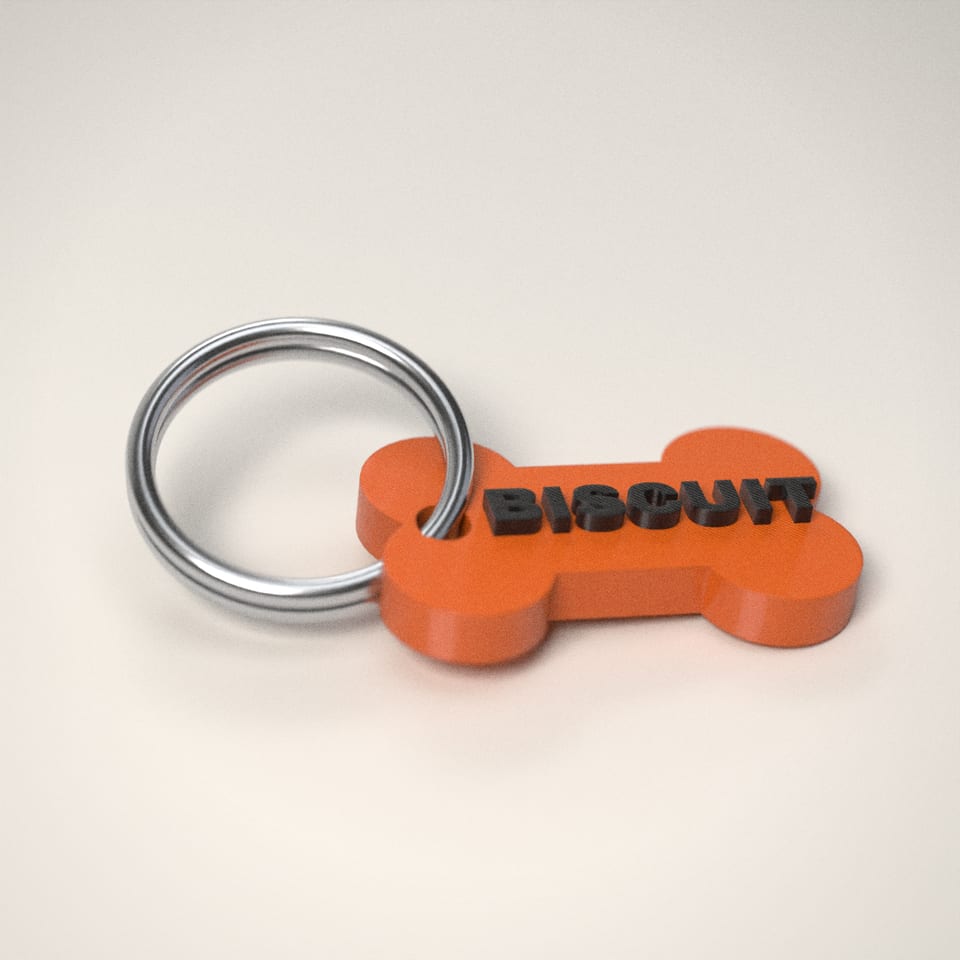
| Dog's name | BISCUIT | Front | Optional, but friendly (see below) |
| Your surname | A SMITH | Back | Required: the owner's name |
| House number and street | 12 DOG LANE | Back | Required: part of your address |
| Postcode | CO6 3AB | Back | Required: pins the address down |
| Mobile number | 07700 900123 | Back | Not required, but the fastest way home |
The Order asks for an address, and doesn't spell out how much of it. Lots of owners and tag makers use house number plus postcode, because that identifies a home in the UK. If you have room, adding the street name removes any doubt. If your house has a name rather than a number, use the name.
"We'd always put a mobile number on. The address keeps you legal, but the phone number is what actually gets your dog home the same afternoon."
The Hatch3D Studio
Should the dog's name go on the tag?
There's no legal need for it, and owners genuinely disagree. Some leave it off so a stranger can't call the dog by name. Others put it on because it helps whoever finds a nervous dog to calm it down.
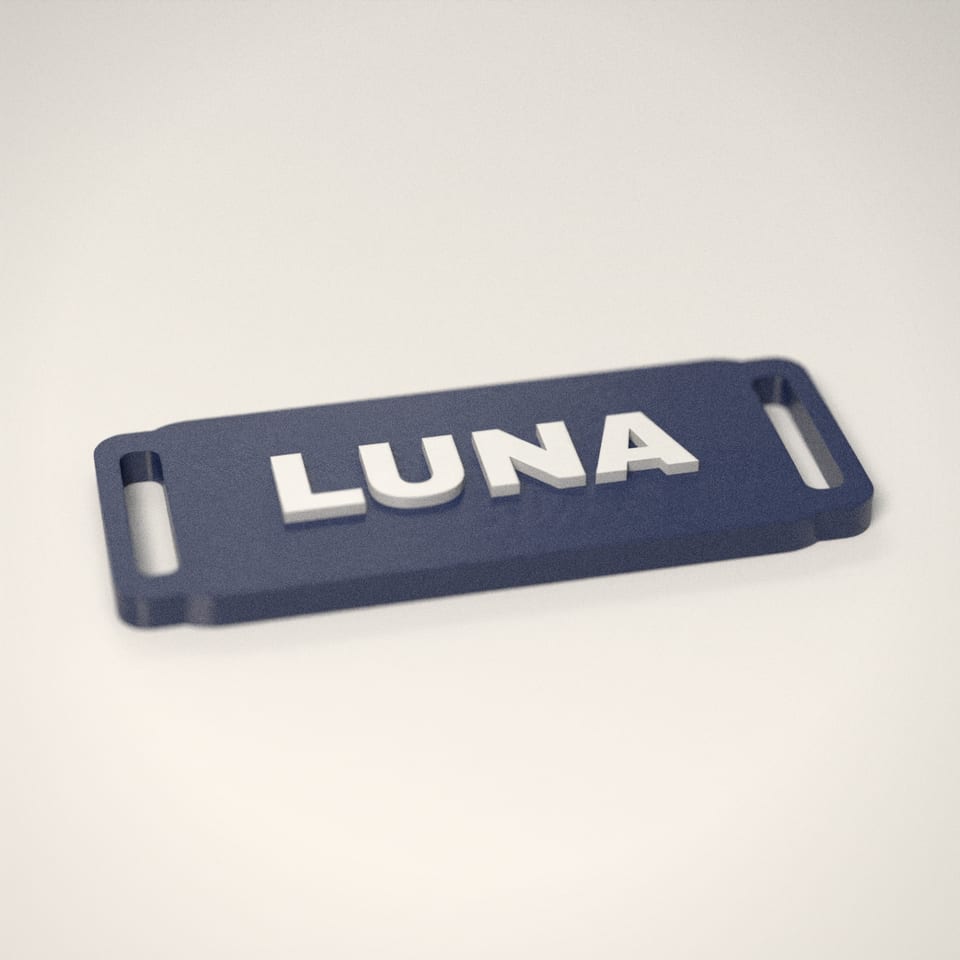
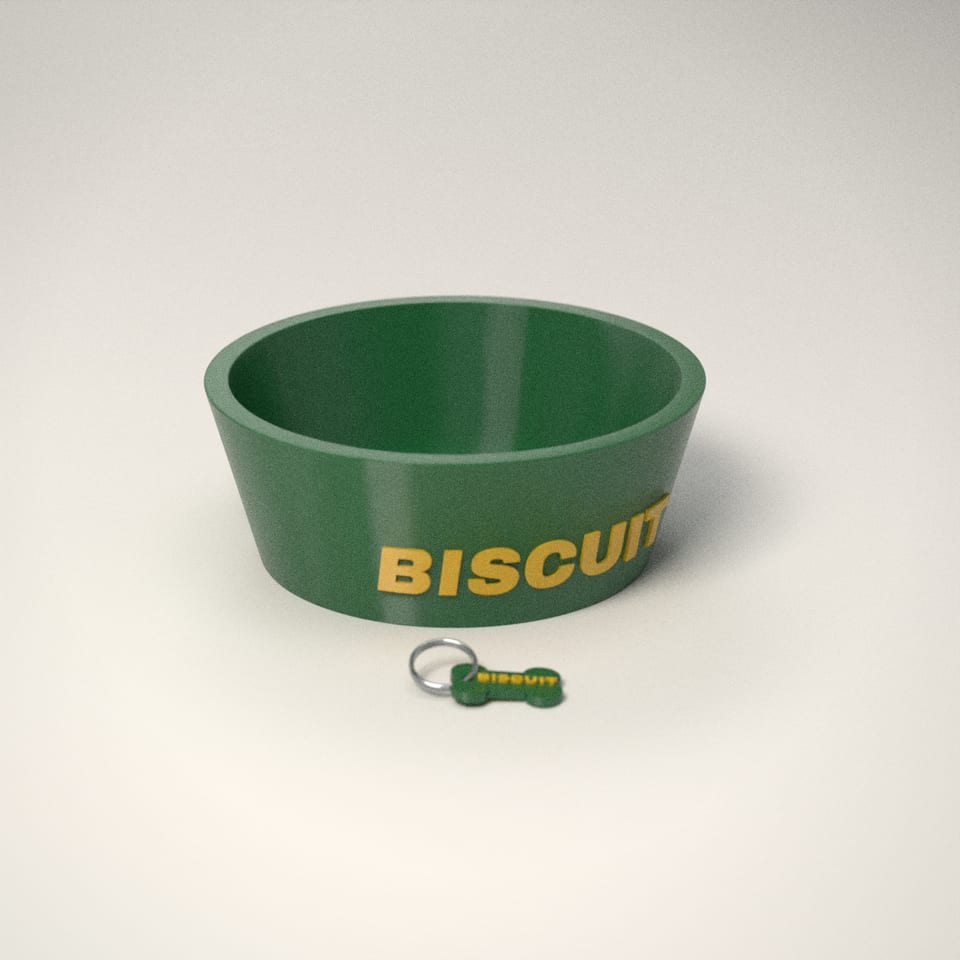
A middle path is what we do on our tags: the dog's name on the front, where it reads like a name badge, and your details on the back. If you'd rather keep the name private, put something like "I'M CHIPPED" or "PLEASE CALL" on the front instead.
Microchip and tag: why you need both
Microchipping is a separate legal requirement. GOV.UK says all dogs "must be microchipped and registered by the time they're 8 weeks old", and you can be fined up to £500 if your dog isn't chipped when it should be. You also have to keep the chip details up to date when you move.
A chip doesn't replace the tag, though. A chip needs a scanner, which means a vet, a warden or a rescue. A tag can be read by anyone with eyes. The law asks for both, and in practice they do different jobs: the tag gets a quick phone call, the chip proves who the dog belongs to.
How much fits on 25, 32 and 38 mm tags?
Tags are small, and letters need to be big enough to read on a muddy dog. These are the limits on our silent dog ID tag, which we set so every character prints clearly:
| Tag size | Best for | Front (dog's name) | Back lines | Characters per back line |
|---|---|---|---|---|
| Small, 25 mm | Dogs under 10 kg | Up to 7 letters | 3 | Up to 14 |
| Medium, 32 mm | Most dogs | Up to 9 letters | 4 | Up to 14 |
| Large, 38 mm | Big dogs | Up to 10 letters | 4 | Up to 14 |
Spaces count as characters. A few tips for squeezing it in:
- Use an initial and surname: "A SMITH" rather than "ANNA SMITH".
- Shorten "Road", "Lane" and "Close" to RD, LN and CL.
- On a small tag with three lines, use surname, house number with postcode ("12 CO6 3AB"), and your mobile.
- Write mobile numbers with one space ("07700 900123") so they're easy to read.
Metal, silent or slide-on?
All three can carry the details the law asks for. The Order doesn't say what the tag has to be made of, only that the name and address are on the collar or on a plate or badge attached to it. What matters is that it's readable and stays on.
| Type | What it's like | Typical UK price (2026) | Watch out for |
|---|---|---|---|
| Engraved metal (steel, brass) | Classic, very durable | About £5–£25 | Jingles against other tags and the bowl |
| Printed aluminium | Colourful pictures | About £10–£15 | Printed surface can scratch and chip over time |
| Silicone | Quiet, soft | Around £18 | Fewer colours and shapes |
| 3D printed PETG (ours) | Silent, raised letters in a second colour | from £8 | Not a chew toy; check it monthly |
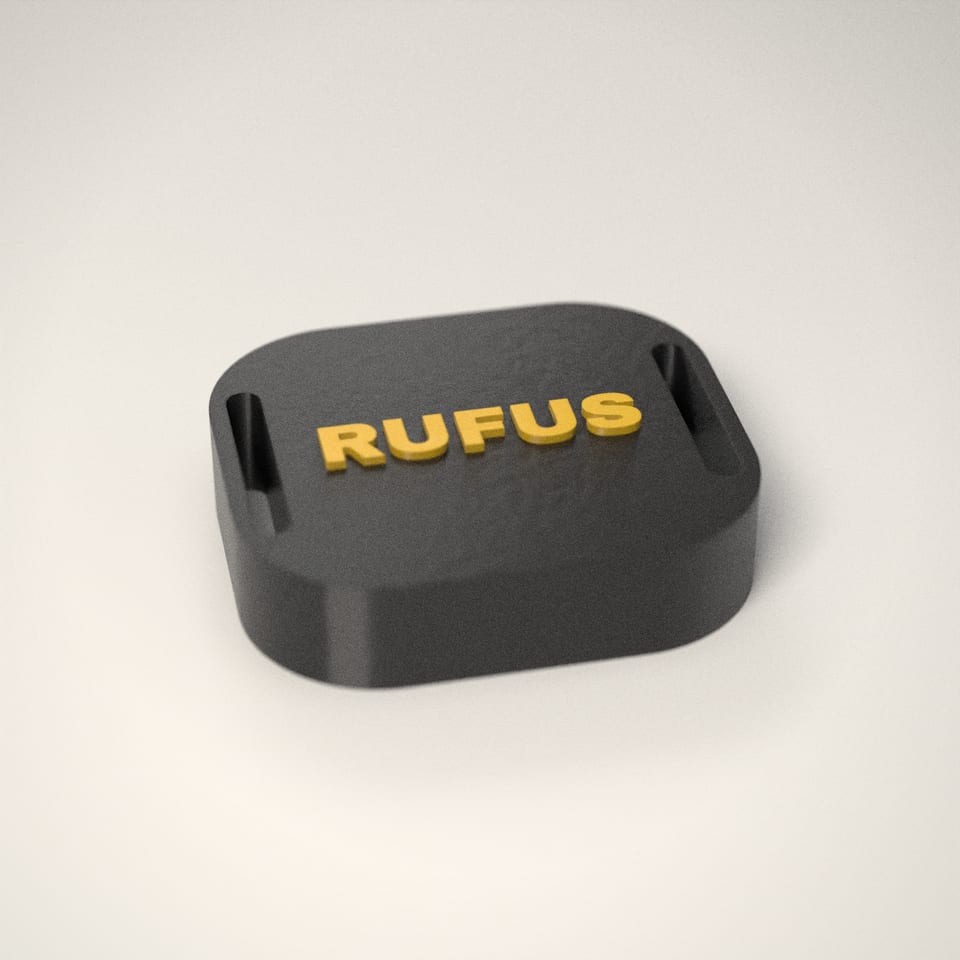
| Slide-on collar tag | Sits flat on the collar, nothing dangles | £8 | Must match your collar width |
Our silent tag is printed in PETG, which is tougher than the PLA used for most 3D printed gifts. The letters are printed in a second colour as part of the tag, so there's no paint to rub off. It's about 4 mm thick and weighs about 4 g.
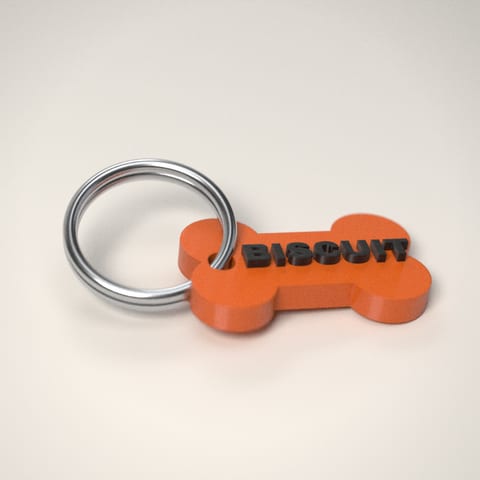
If your dog hates anything swinging under its chin, a slide-on collar tag sits flat against the collar. It has less room than a hanging tag, so check you can fit your surname, address and number before choosing it as your only ID.
Look after the tag
Whatever you choose, check it once a month. Look for worn letters, a thin split ring or a cracked tag, and replace it before it fails rather than after. Dogs who chew their own or each other's collars wear tags out fastest.
FAQ
Is it illegal for my dog not to wear a tag?
Yes, in a public place. The Control of Dogs Order 1992 requires a collar showing the owner's name and address, with exemptions for some working dogs while they're working.
Does a microchip mean I don't need a tag?
No. The microchip rules and the collar-and-tag rule are separate, and GOV.UK says a dog must still wear a collar and tag with your name and address in public.
Is a plastic or 3D printed tag legal?
The Order doesn't specify a material. A plastic tag is fine as long as your name and address are clearly readable and it stays attached to the collar.
Do I have to put my phone number on?
No, it isn't required by law. It's still the single most useful thing on the tag, so we recommend it.
Can I put the tag on a harness instead?
The Order talks about a collar. If your dog wears a harness on walks, the safest option is a collar with the tag as well.
Shop this guide
Sources
- The Control of Dogs Order 1992 (SI 1992/901), articles 2 and 3, legislation.gov.uk
- Get your dog or cat microchipped, GOV.UK
- Dog identification and UK law, D for Dog (example of seller guidance on address wording)
- Personalised dog tags on Not On The High Street and Amazon UK, price ranges checked October 2026